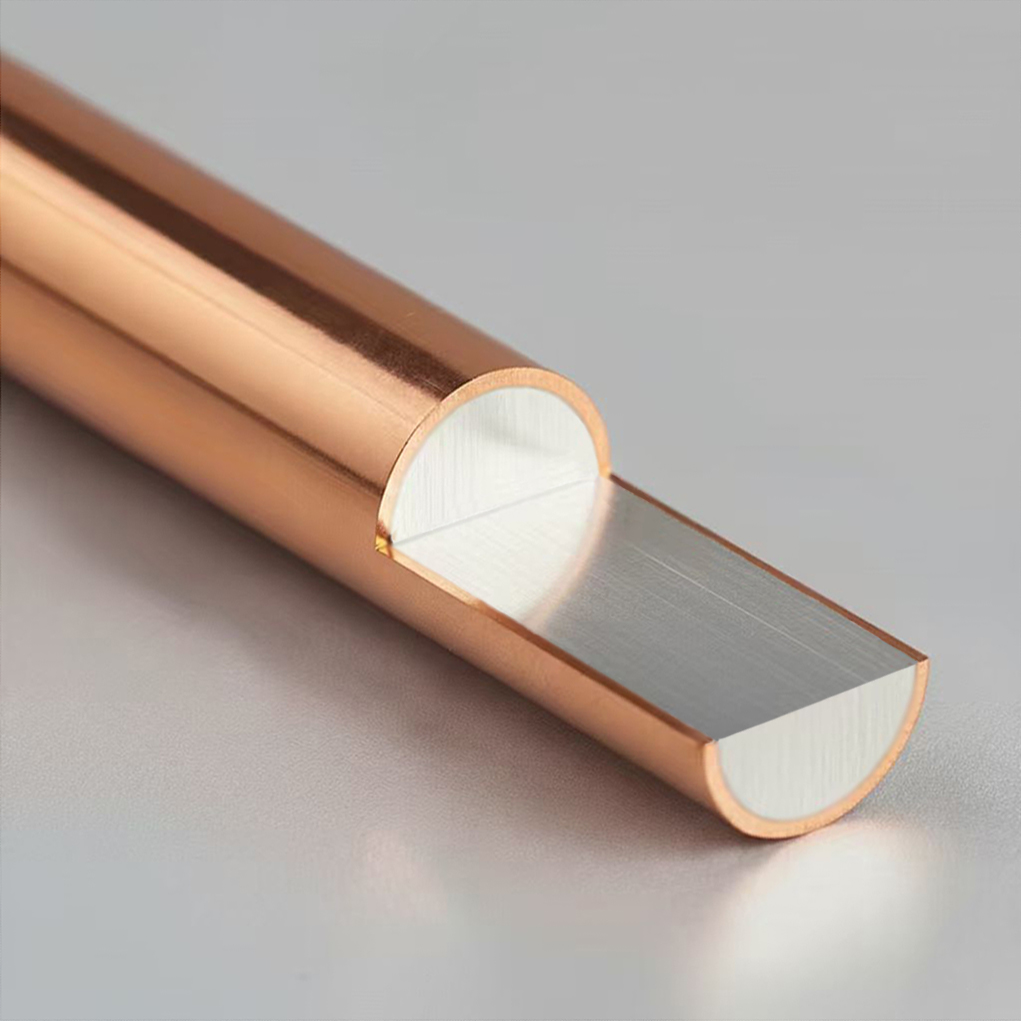
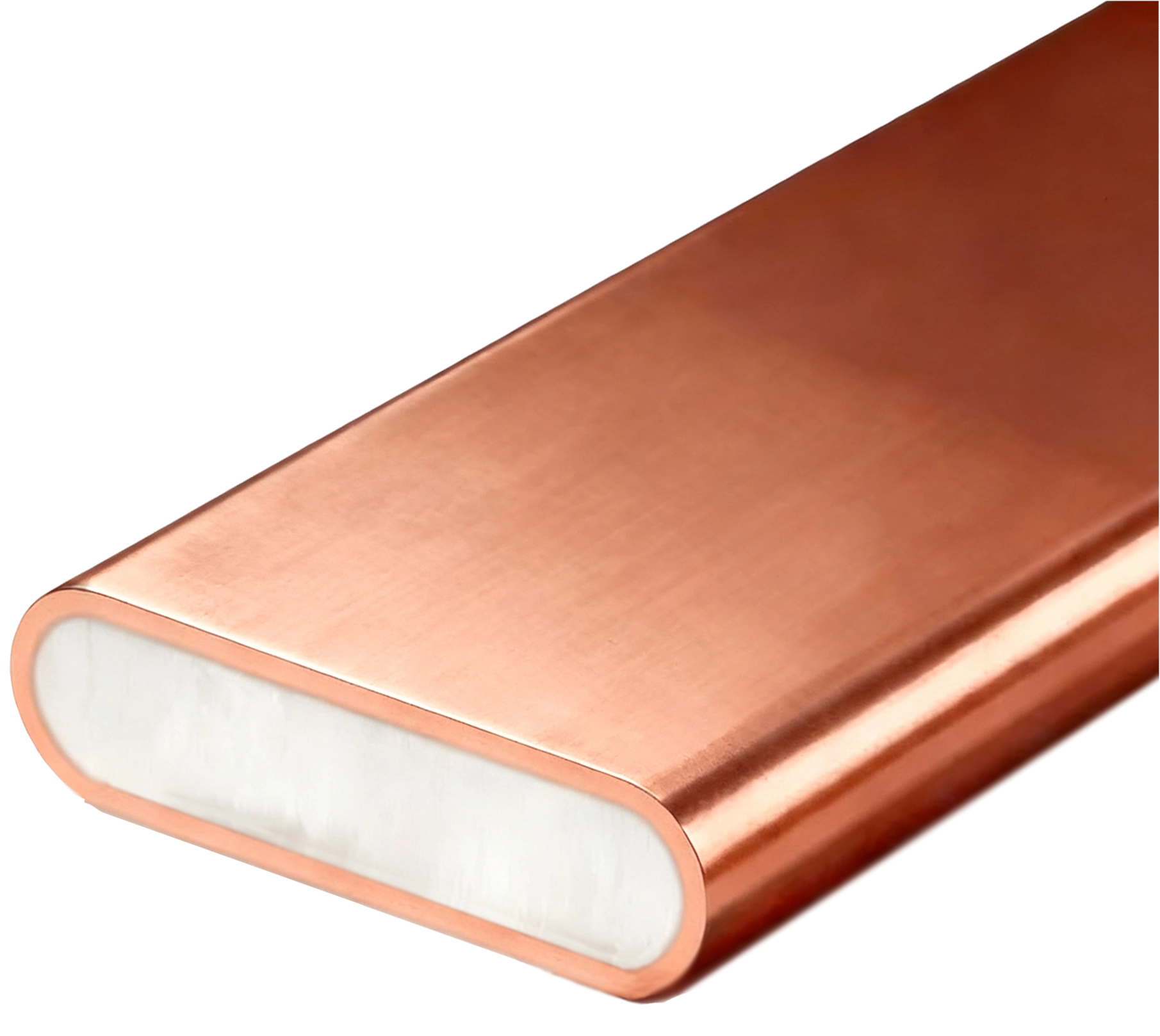
Metallurgical Bond
Our metallurgical bonding technology ensures a seamless interface between different metals at the atomic level.
Bonding Interface Characteristics
⚛️
Atomic-Level Integration
- • Direct atomic bonding between metal layers
- • No intermediate adhesive or plating layers
- • Continuous, void-free interface
💪
Mechanical Properties
- • Excellent peel strength and shear strength
- • Superior fatigue resistance under cyclic loading
- • Stable performance across temperature extremes
🔍
Quality Assurance
- • 100% interface inspection using ultrasonic testing
- • Statistical process control throughout production
- • Certified bond strength for each production batch
Interface Comparison
| Property | Metallurgical Bond | Electroplated |
|---|---|---|
| Bond Strength | ≥ 60 MPa | 5-15 MPa |
| Interface Continuity | 100% Continuous | Often discontinuous |
| Thermal Stability | Excellent | Poor - delaminates |
| Corrosion Resistance | Excellent | Moderate |
Technology Deep Dive: Atomic Diffusion Mechanism
Unlike traditional processes that rely on surface roughness for mechanical interlocking, Raytron's metallurgical bond technology promotes the inter-diffusion of copper and aluminum atoms across the interface barrier by strictly controlling thermodynamic parameters during annealing. This diffusion creates a solid-solution transition layer with a composition gradient, effectively erasing the physical boundary.
Result: Reliable performance in the most demanding applications
Microstructure Comparison
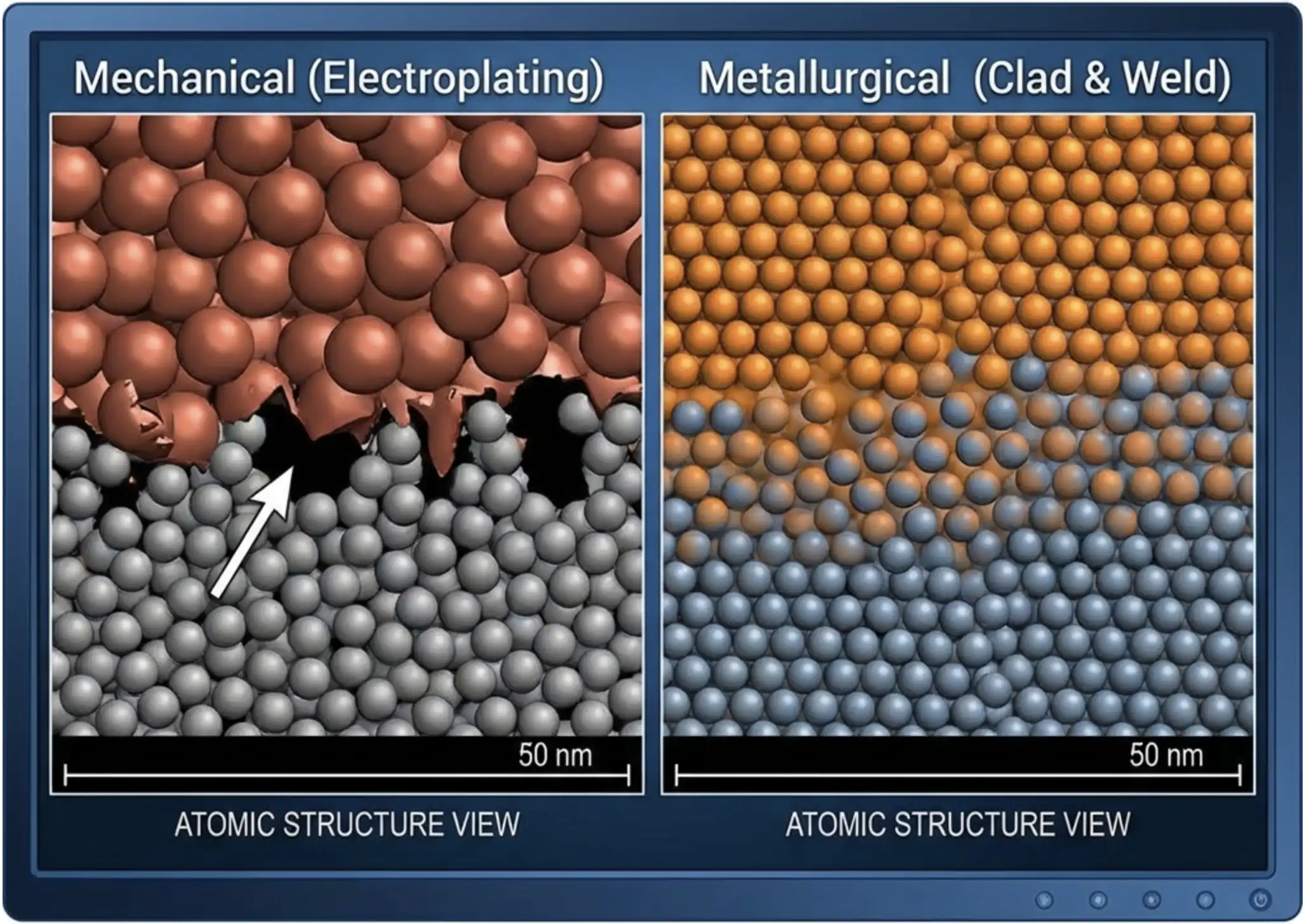
Simulated interface structure under high magnification
Mechanical Bond (Electroplating)
- ❌ Micro-gaps at interface
- ❌ Prone to galvanic corrosion
- ❌ Peels easily due to thermal expansion mismatch
Metallurgical Bond (Clad & Weld)
- ✅ Atomic inter-diffusion
- ✅ Eliminates contact resistance
- ✅ Processes like a single metal
FAQ
Why is metallurgical bonding more reliable?
Mechanical bonding relies only on physical adhesion, which fails easily under bending or thermal stress. Metallurgical bonding creates a new alloy layer through atomic diffusion, "locking" the metals together as one integral unit, ensuring superior reliability.
Does brittle compound form at the interface?
By precisely controlling diffusion temperature and time, we optimize the interface layer thickness to prevent excessive brittle intermetallic compounds, ensuring sufficient bond strength while maintaining excellent ductility.
Products Utilizing This Technology