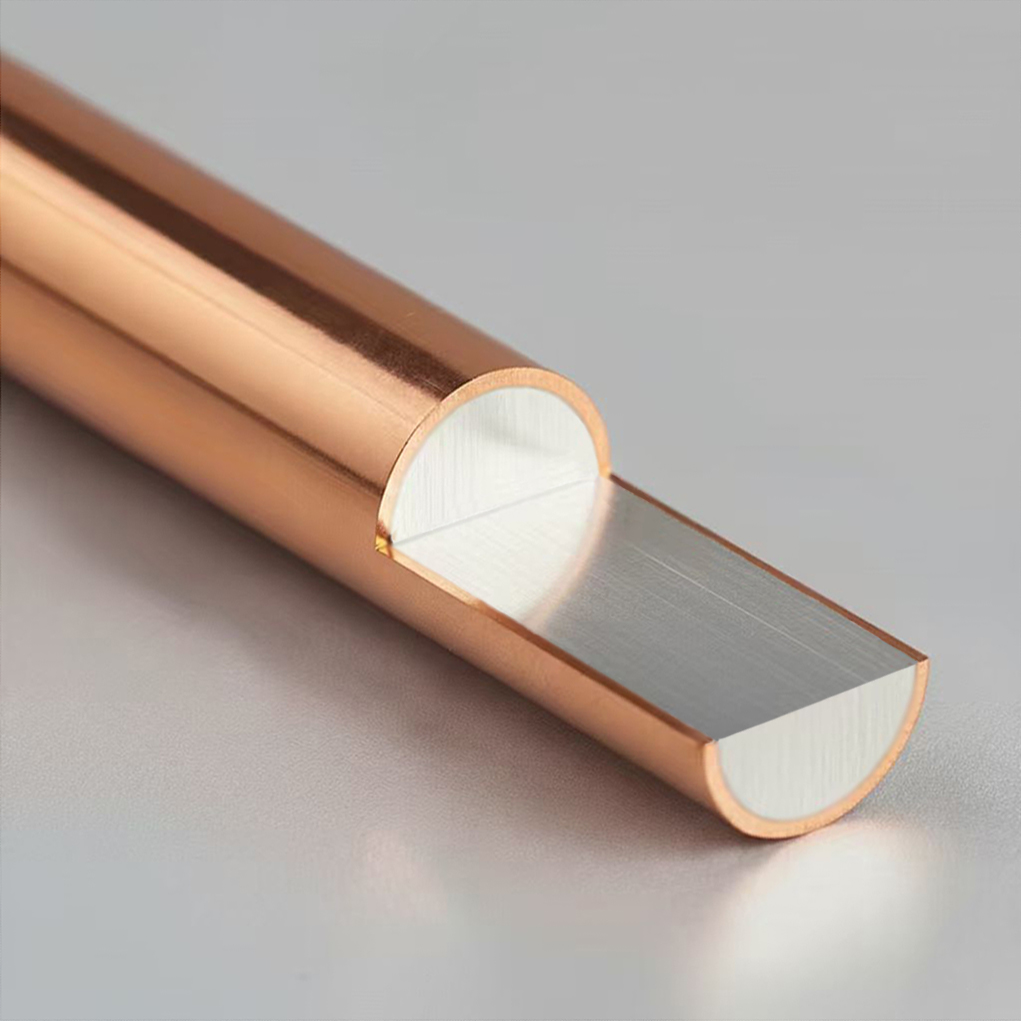
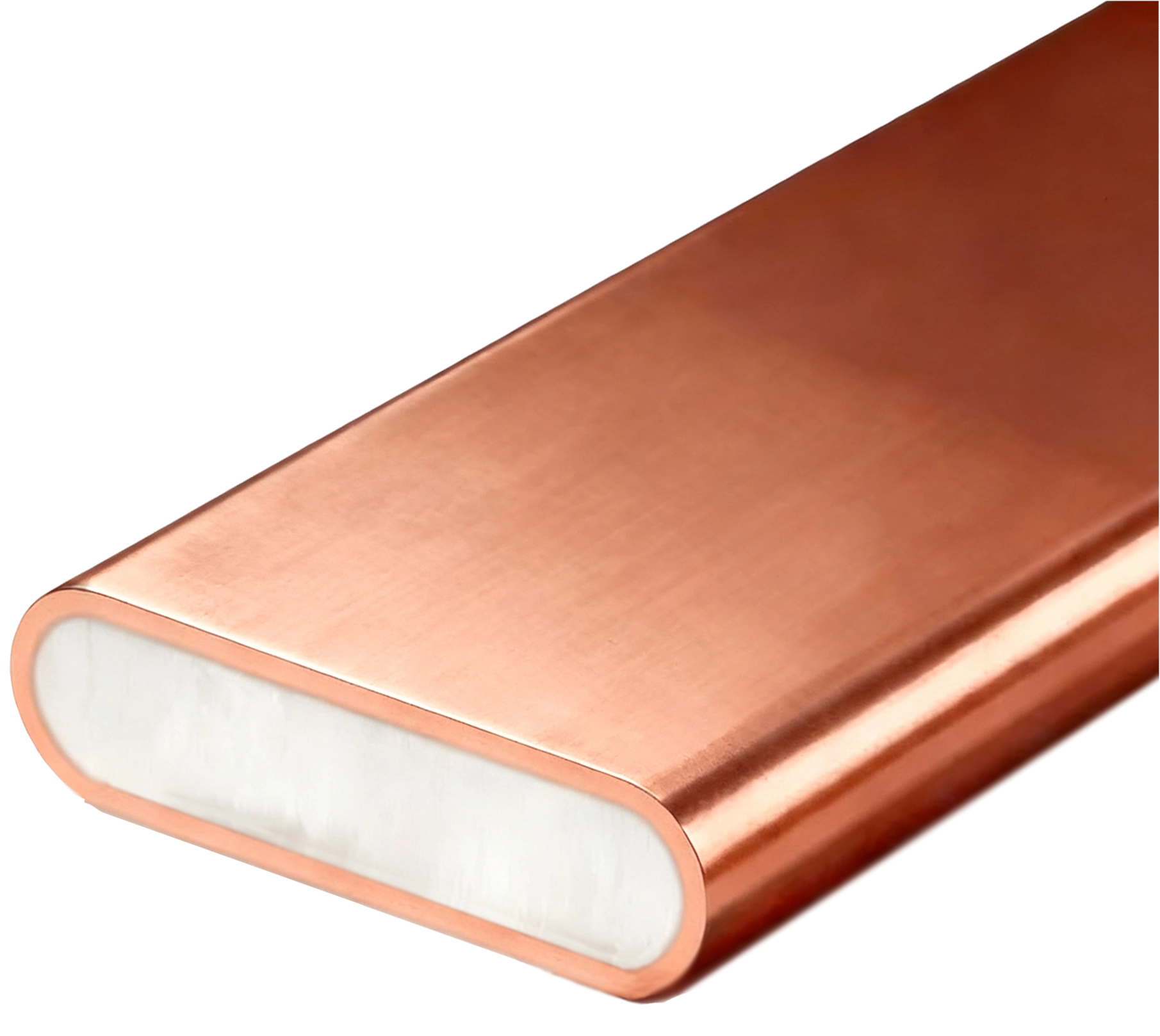
Clad & Weld Process
Our proprietary Clad & Weld process creates metallurgically bonded bimetallic materials with superior performance characteristics.
Key Process Characteristics
Solid-State Bonding
- • No melting of base metals during the bonding process
- • Preserves the original properties of both metals
- • Creates a true metallurgical bond at the interface
High Bond Strength
- • Bond strength ≥ 60 MPa
- • Significantly higher than electroplated alternatives
- • Consistent interface quality across the entire length
Material Combinations
Copper Clad Aluminum (CCA)
Copper cladding ratio: 60%-90%
Lightweight, excellent conductivity
Copper Clad Steel (CCS)
Copper cladding ratio: 10%-40%
High strength for demanding applications
Nickel Clad Copper (NCC)
Various nickel ratios available
Corrosion resistance for harsh environments
Silver Clad Copper (SCC)
High-conductivity applications
Premium performance for precision applications
Process Declaration
All our bimetallic products are manufactured using the Clad & Weld process with metallurgical bonding, NOT electroplated. This ensures superior bond strength, durability, and performance.
Bond Strength ≥ 60 MPa
Process Visualization
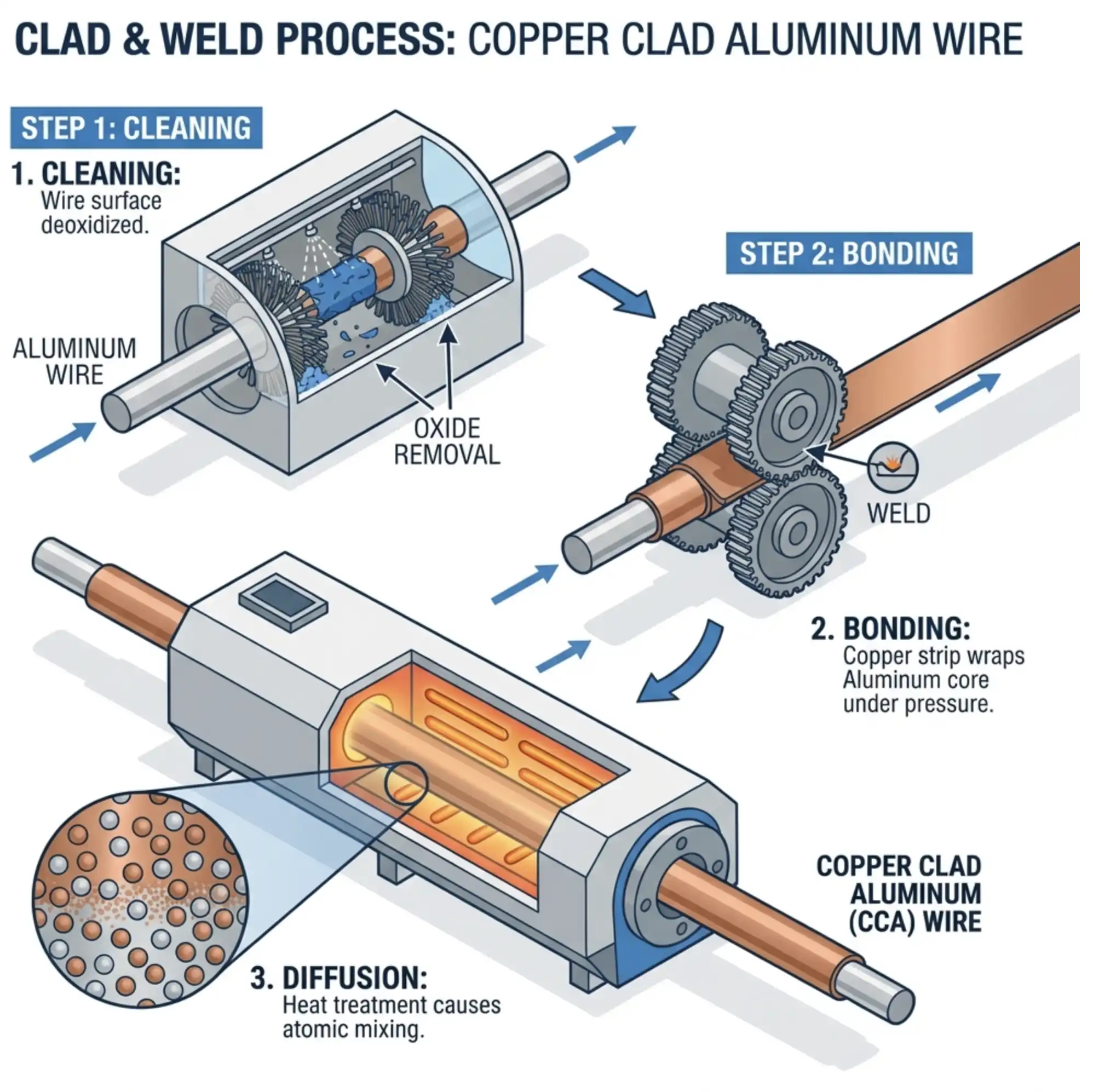
Removes oxides and impurities from raw material surfaces to ensure atomic-level contact.
Physically presses two metals together under high pressure to form an initial mechanical bond.
High-temperature annealing causes atoms to diffuse across the interface, forming a metallurgical bond.
Key Technical Parameters
| Parameter | Range | Note |
|---|---|---|
| Diffusion Temp | 800°C - 1000°C | Depends on material combo |
| Bonding Pressure | > 100 MPa | Ensures gap-free contact |
| Thickness Tolerance | ± 0.005 mm | High precision control |
FAQ
How does Clad & Weld differ from Electroplating?
Does this process affect conductivity?
Products Utilizing This Technology