
Bimetallic Materials: A Comprehensive Introduction
1. 引言
1.1 电导体的发展演变
电导体的历史与电气工程的发展并行。从第一条电报线到现代电网,对最佳导体材料的探索推动了持续创新[1]。
制作历史演进动画 (60秒),展示从纯铜→铝→双金属的发展历程
1:001.2 双金属材料的定义
双金属材料由两种不同的金属结合在一起形成单一复合结构。在电气Applications中,这通常涉及:
- 芯材:提供结构或经济优势
- 包覆材料:提供Surface性能(导电性、Corrosion Resistant性)
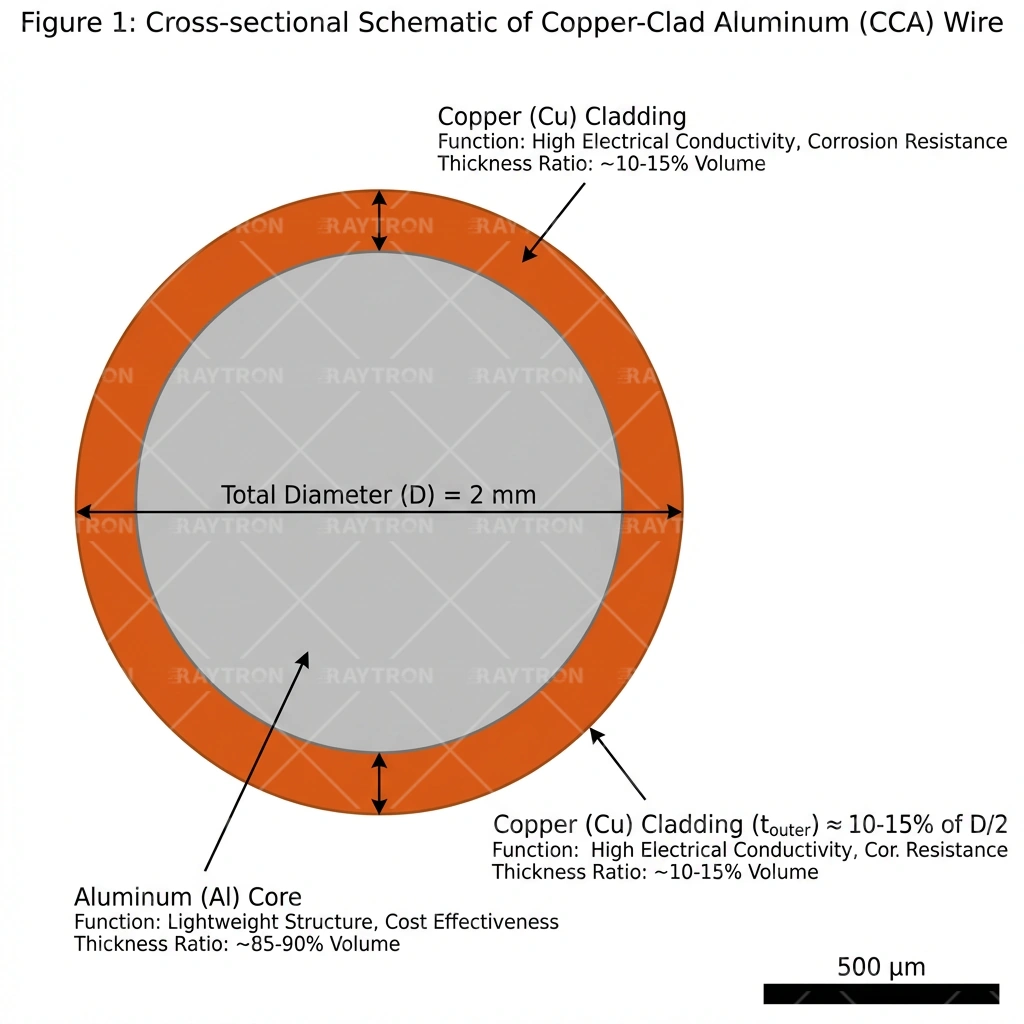
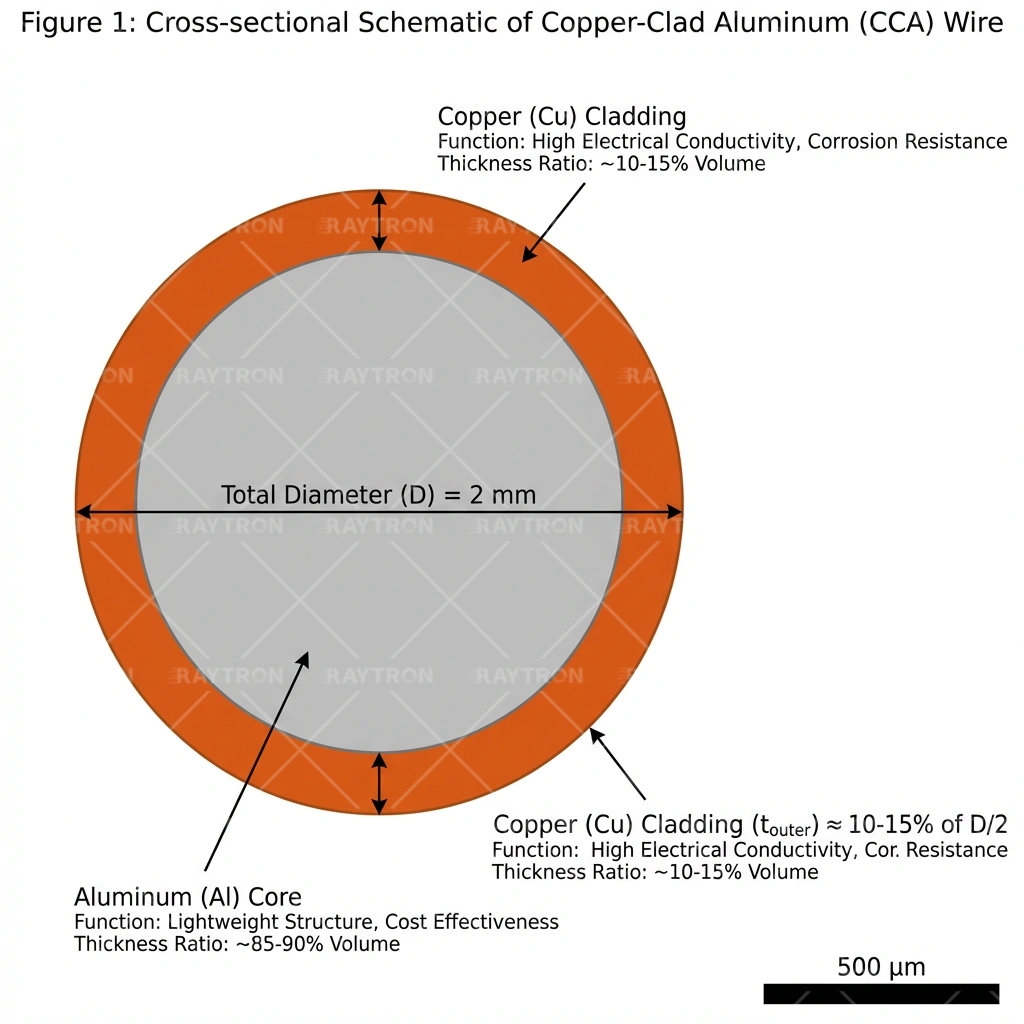
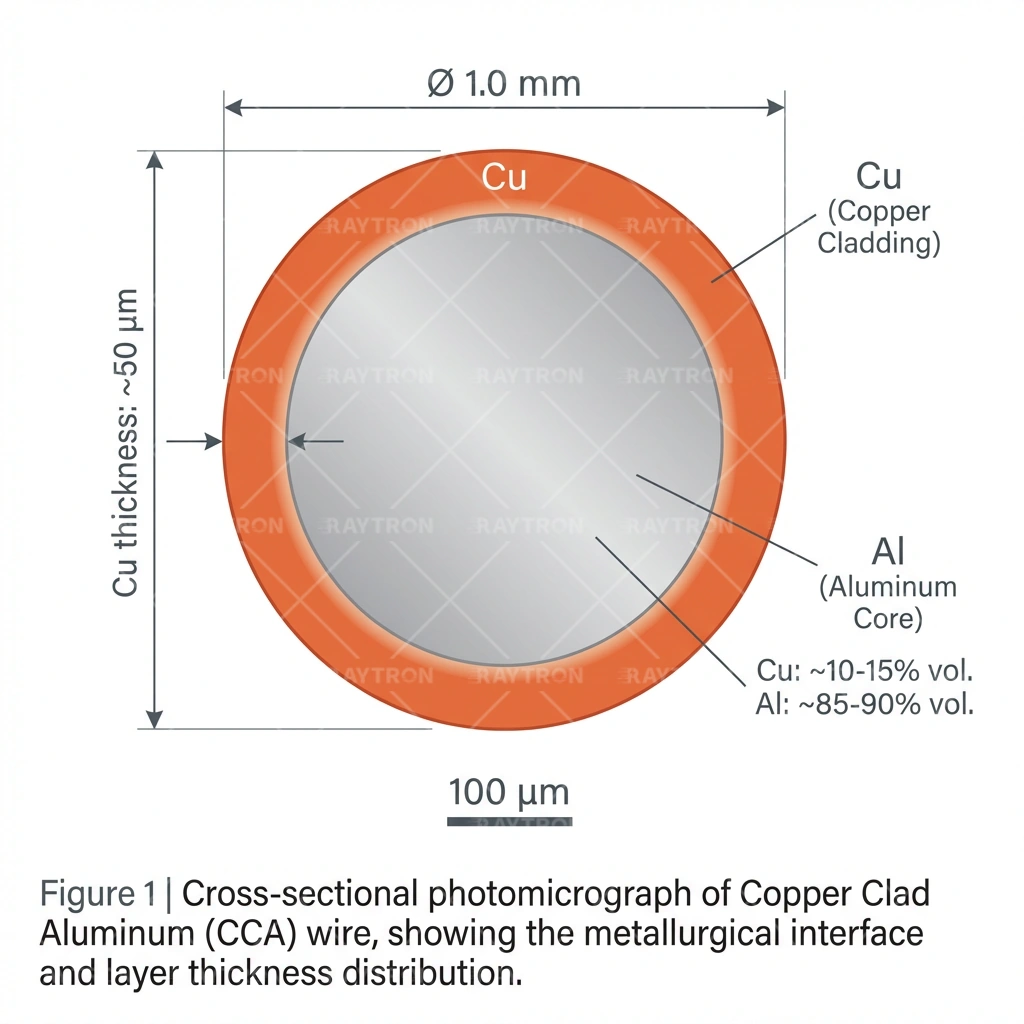
定义 (ASTM B566)[3]:"CCA线由铝芯与铜包覆层冶金结合而成,其中铜占横Cross-Section积的5-15%。"
1.3 为什么选择双金属导体?
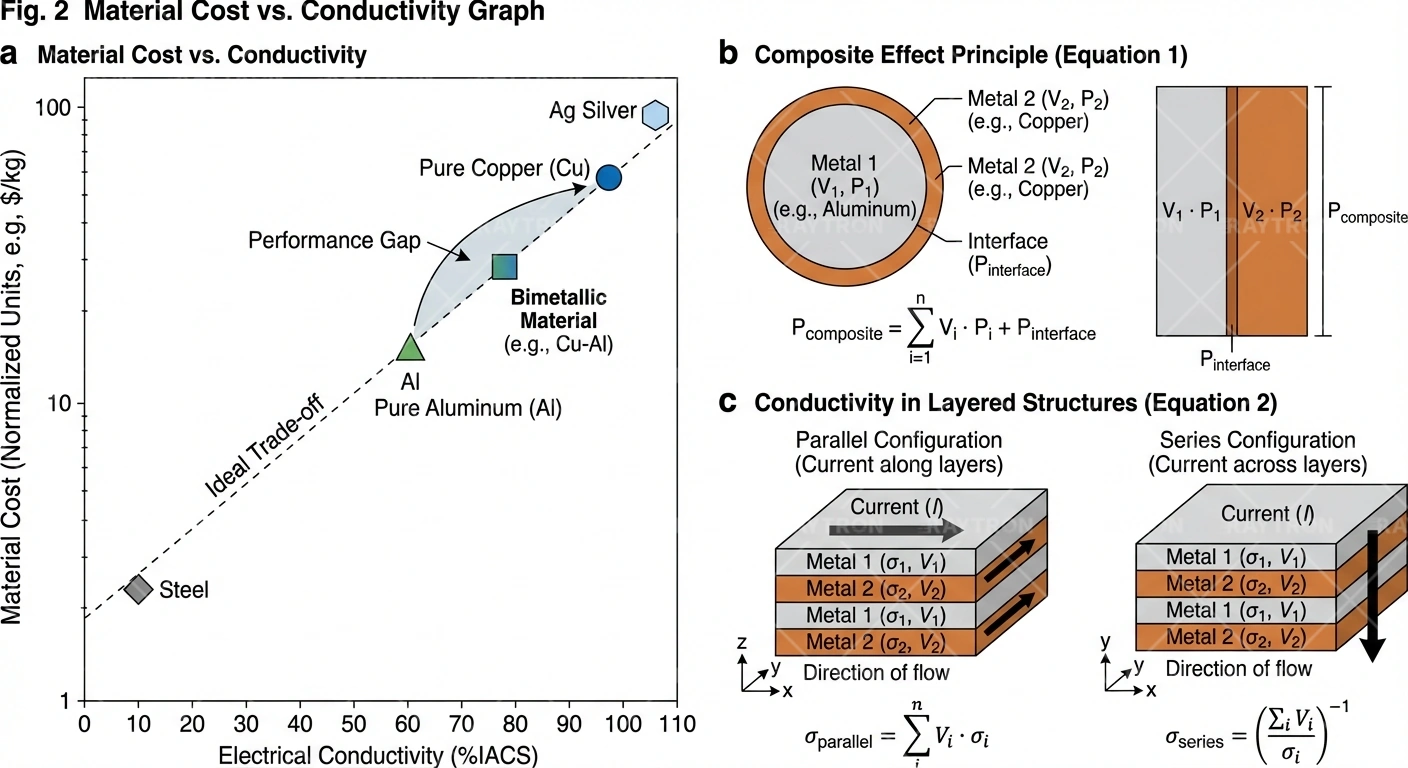
双金属材料的基本原理源于性能差距Question:
2. 基本原理
2.1 复合效应
双金属材料通过几何平均和功能分离实现其性能:
其中:
- Pcomposite = 复合性能值
- Vi = 组分i的体积分数
- Pi = 组分i的性能值
- Pinterface = 界面贡献
2.2 层状结构中的导电性
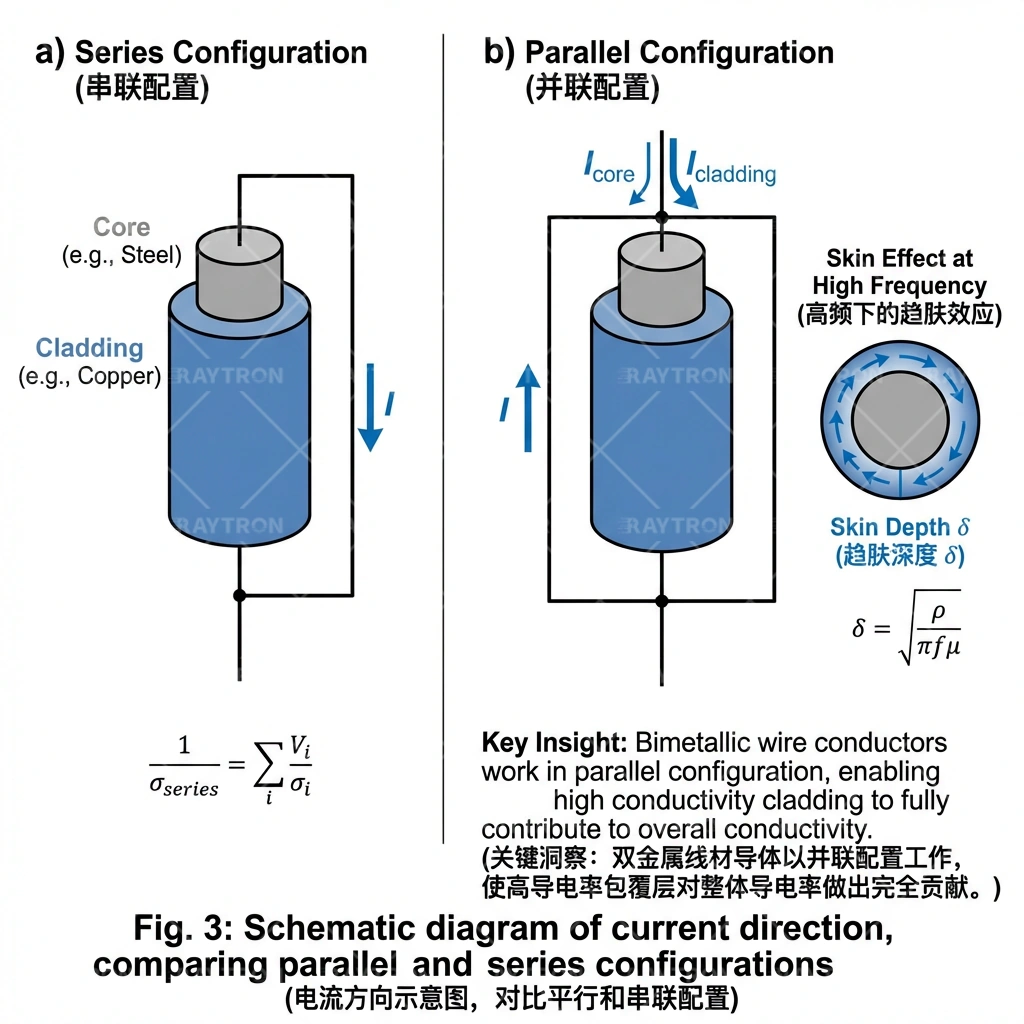
对于电导率,有效电导率取决于电流方向:
并联配置(电流沿层流动):
串联配置(电流穿过层):
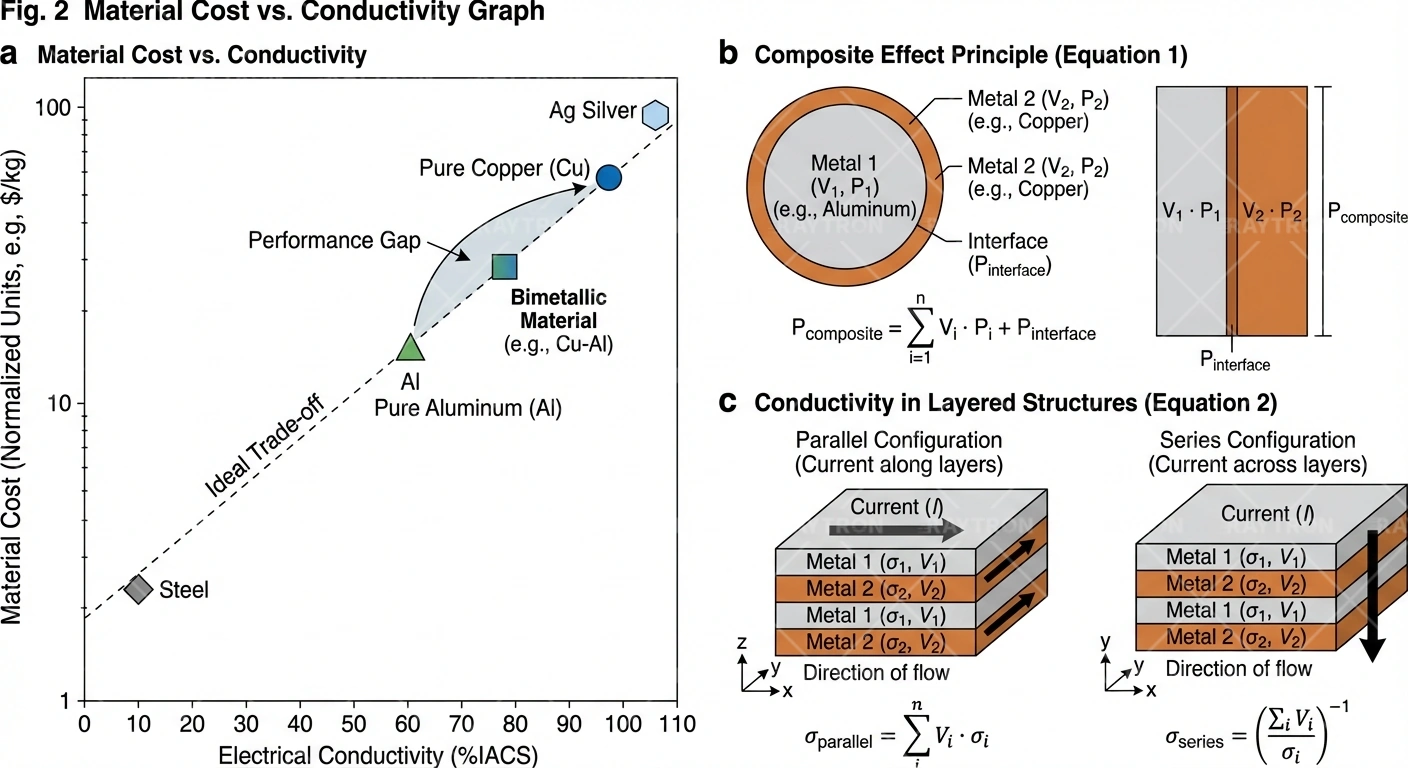
关键洞察:双金属线材导体以并联配置工作,使高Conductivity包覆层对整体Conductivity做出完全贡献。
2.3 高频下的趋肤效应
在高频下,电流集中在导体Surface附近。趋肤深度δ由下式给出:
对包覆导体的意义:对于100 kHz以上的频率,薄铜包覆层(≥0.5 mm)available与实心铜etc.效的性能。
2.4 力学性能协同
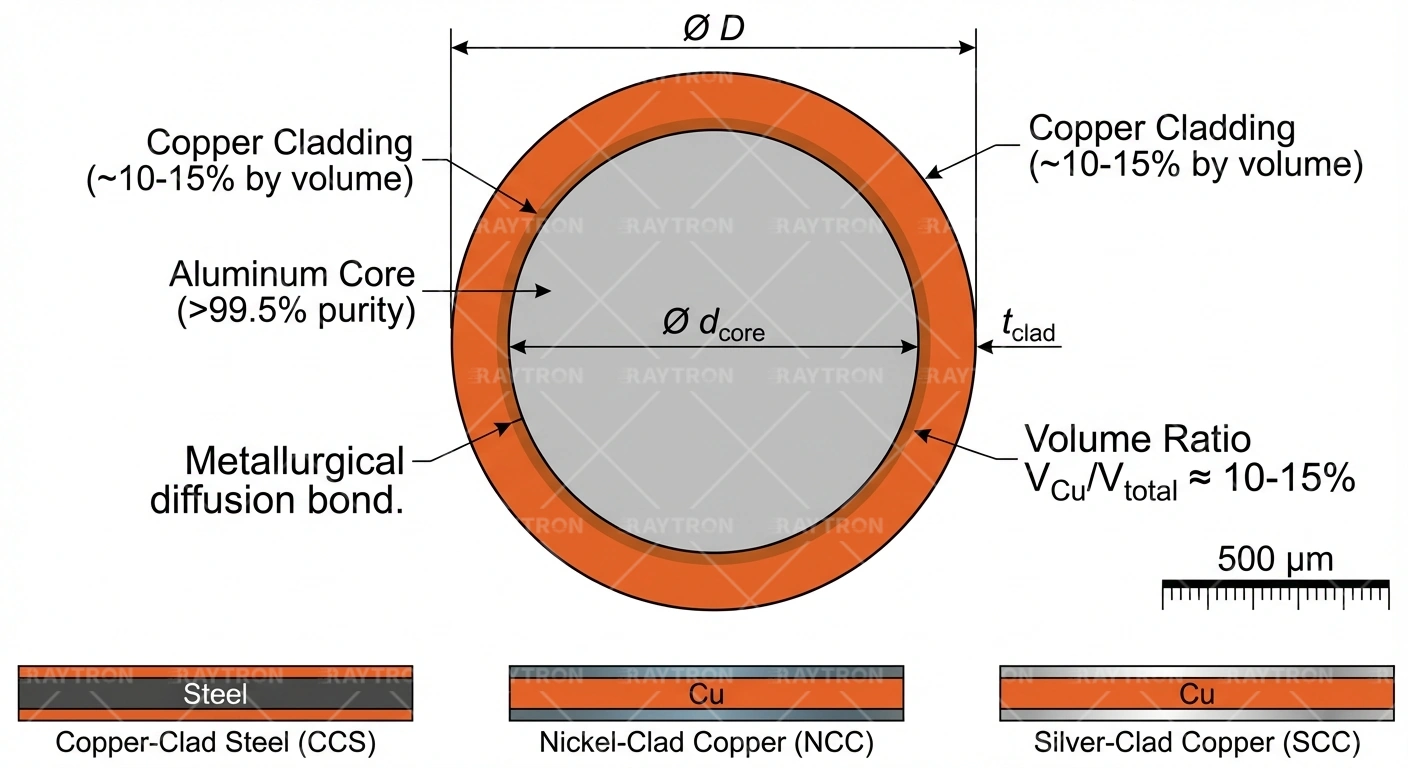
双金属材料可以实现优于任一组分的力学性能:
强度增强机制:
- 约束效应:芯材约束包覆层变形
- 载荷传递:应力在层间传递
- 残余应力:加工引起的预应力
3. 材料组合
3.1 按Applications分类
3.2 CCA (CCA)
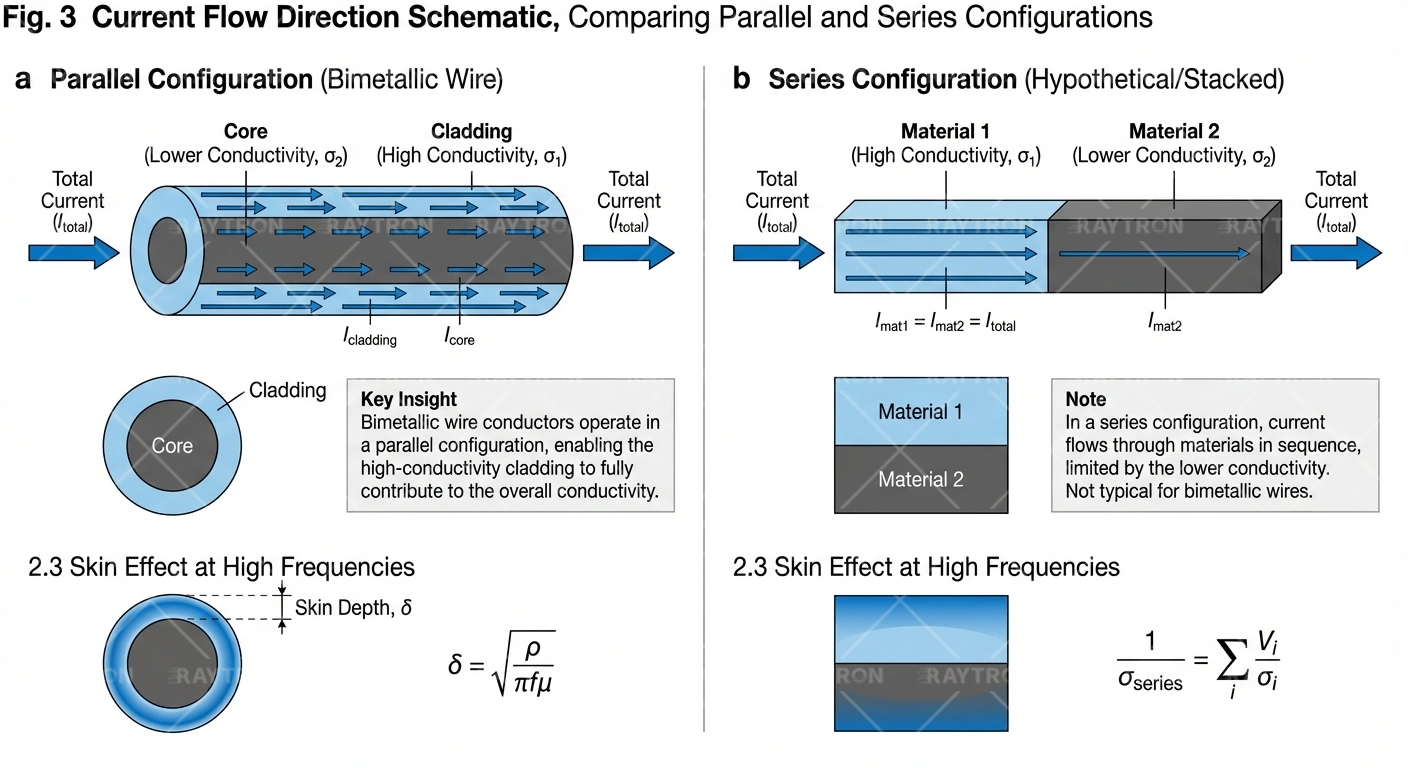
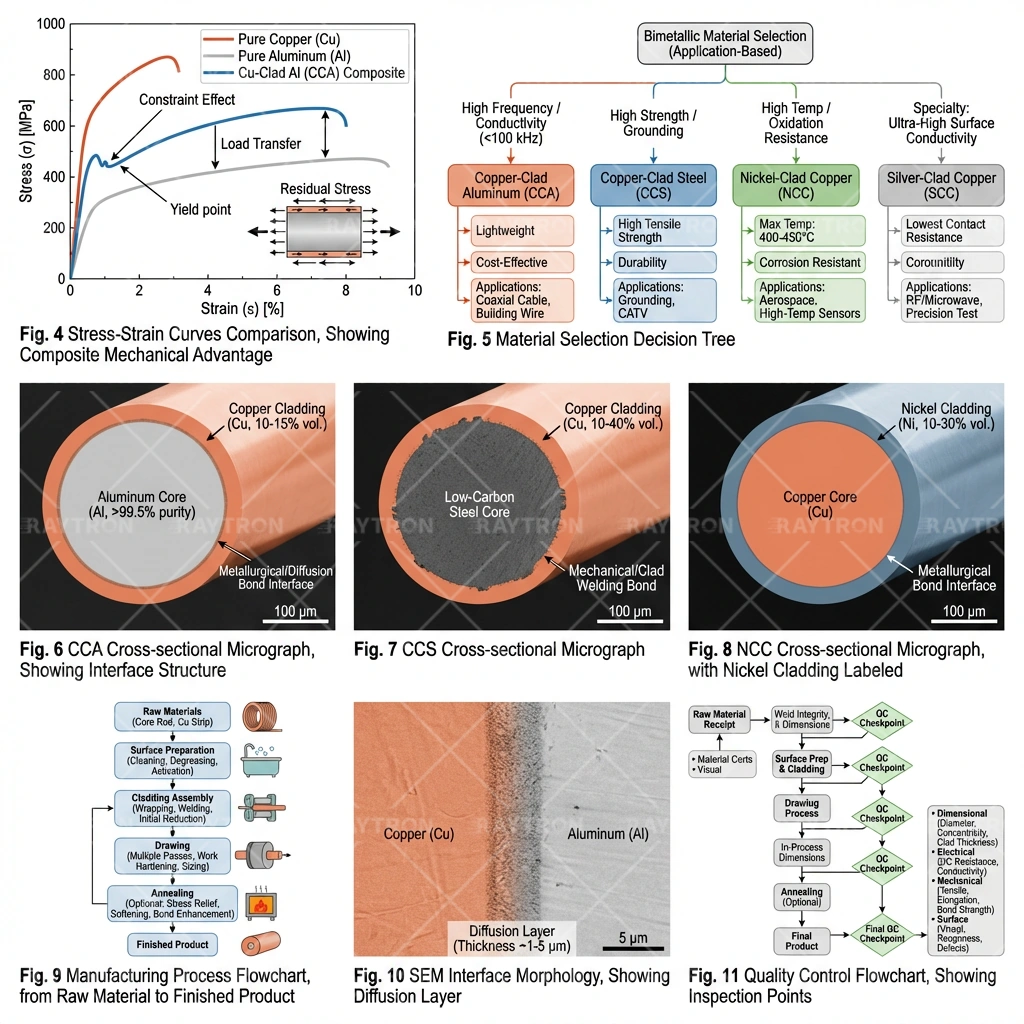
结构:
- 芯材:铝(纯度>99.5%)
- 包覆:铜(通常占体积的10-15%)
- 结合:冶金/扩散结合
Applications:建筑导线、同轴电缆芯、变压器绕组、汽车线束、太阳能光伏装置
standards:ASTM B566, IEC 62602
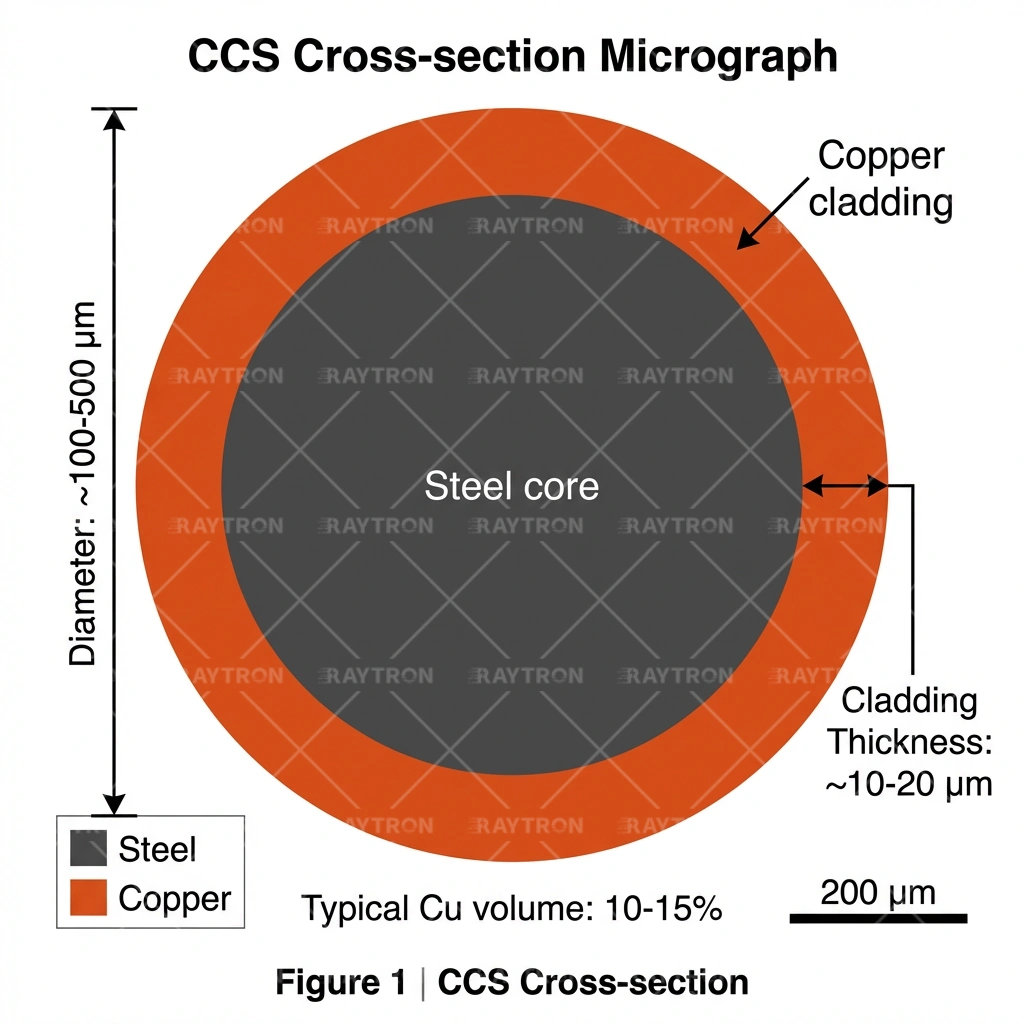
3.3 铜包钢 (CCS)
结构:
- 芯材:低碳钢
- 包覆:铜(通常占体积的10-40%)
- 结合:机械/包覆焊接
Applications:接地导体、CATV引入线、High strength导体、ACSR芯线
standards:ASTM B452, ASTM B227
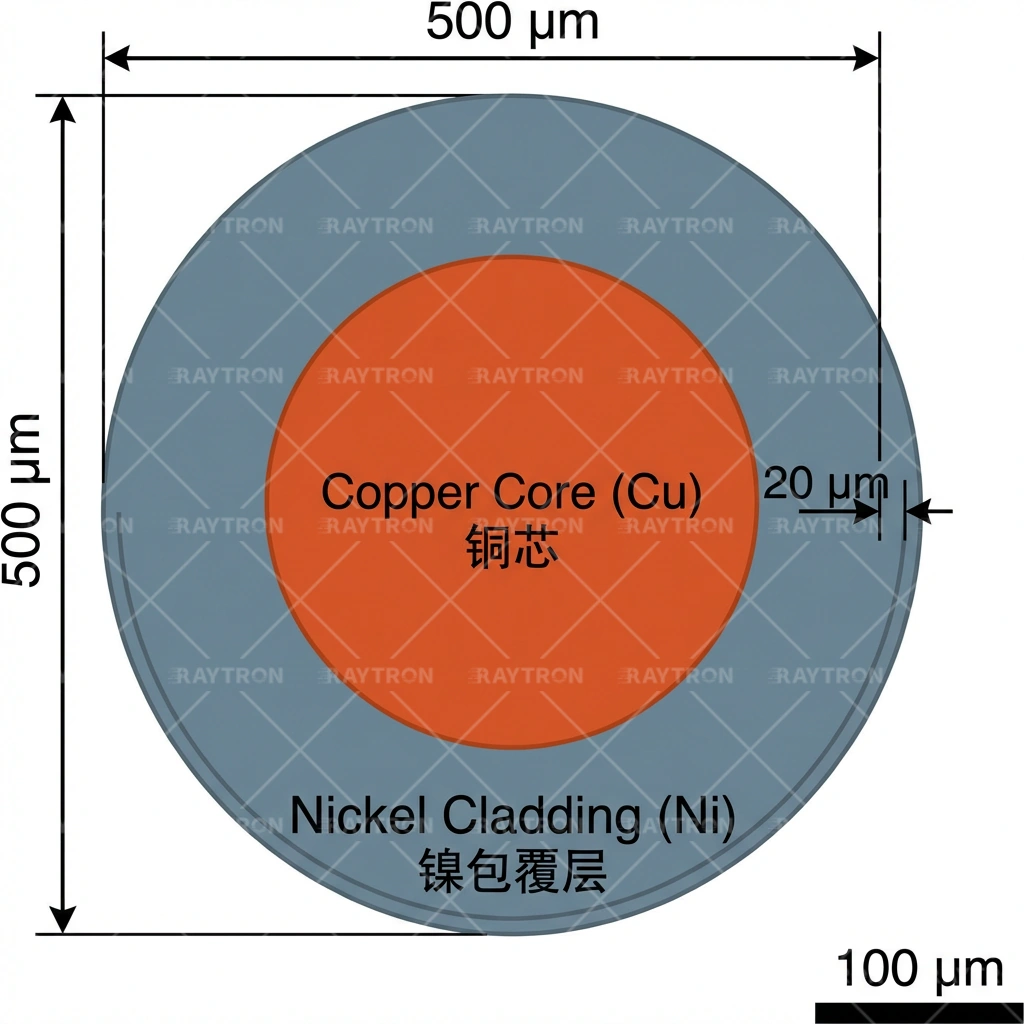
3.4 镍包铜 (NCC)
结构:
- 芯材:铜
- 包覆:镍(通常占体积的10-30%)
- 结合:冶金结合
关键性能:
- 最高Operating Temperature:400-450°C
- Conductivity:85-90% IACS
- 优异的Anti-oxidation性
Applications:Aerospace导线、石化仪表、高温传感器
standards:ASTM B355, SAE AS4395
3.5 银包铜 (SCC)
结构:
- 芯材:铜
- 包覆:银(通常占体积的5-15%)
关键性能:
- SurfaceConductivity:100%+ IACS
- 接触电阻:极低
- 成本较高
Applications:射频/微波系统、高端音频、精密测试设备
4. 制造工艺
4.1 包覆方法概述
制作包覆工艺动画 (90秒),展示三种主要方法
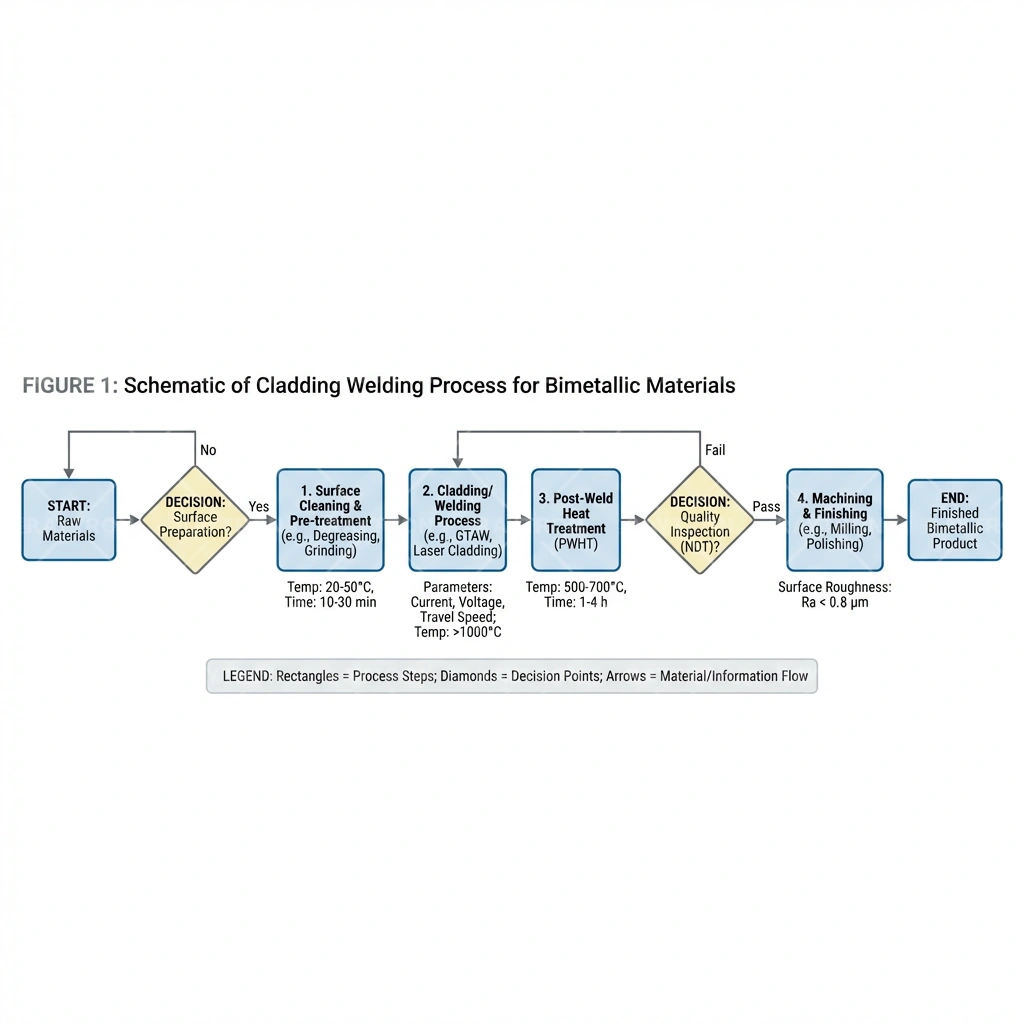
1:304.2 包覆焊接工艺(主要方法)
工艺步骤:
- Surface准备:芯杆清洗、铜带脱脂、Surface活化
- 包覆组装:铜带包裹、焊缝形成、初始减径
- 拉拔:多道次拉拔、加工硬化、尺寸控制
- 退火(可选):消除应力、软化、增强结合
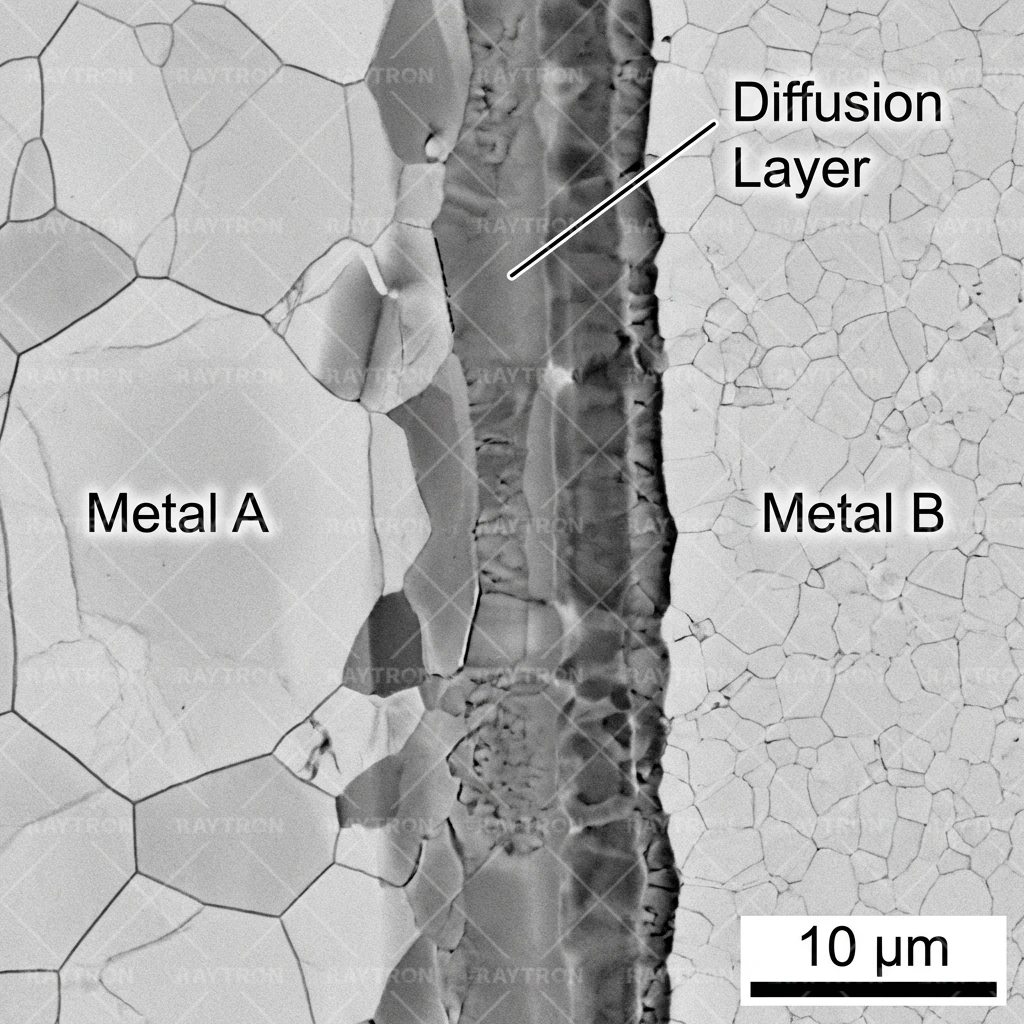
4.3 界面形成
金属-金属界面的质量决定Products性能:
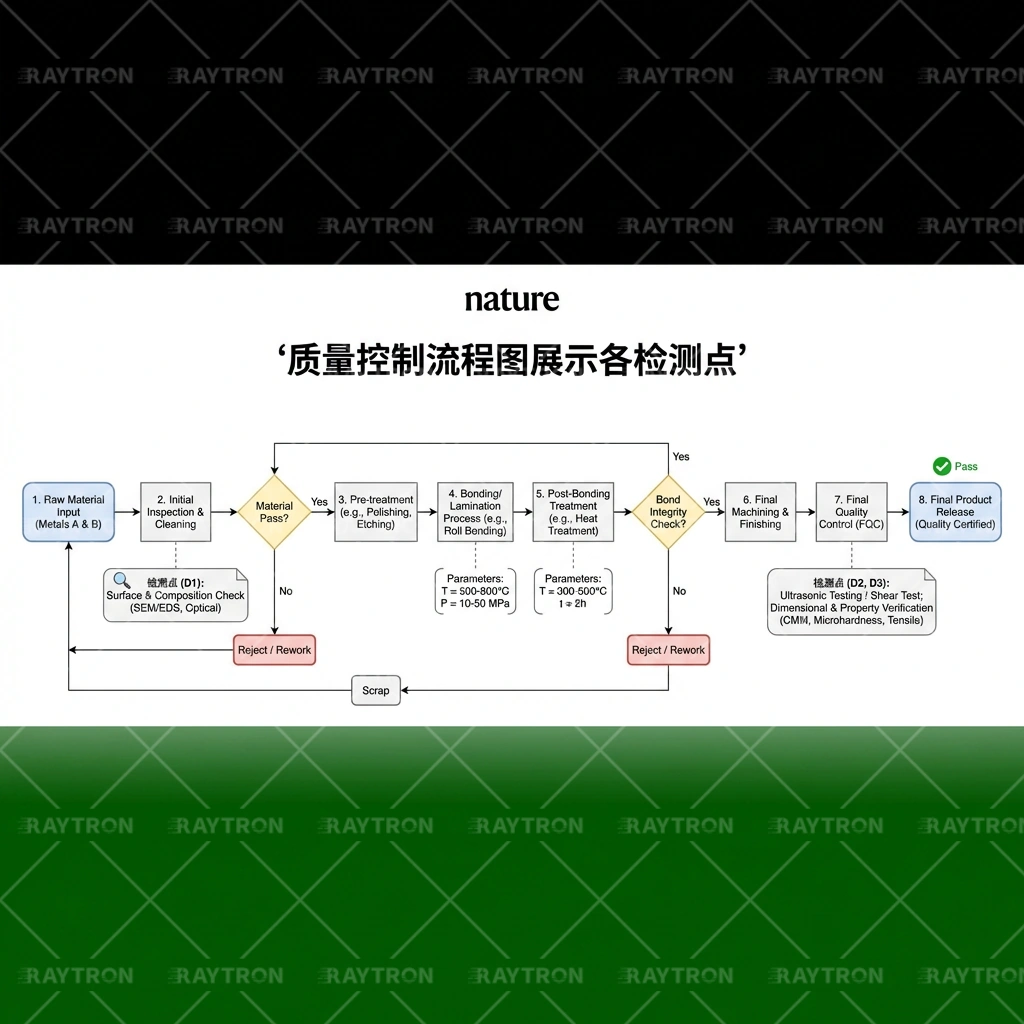
4.4 质量控制
测试协议:
- 尺寸检验:直径测量、同心度验证、包覆厚度
- 电气测试:直流电阻、Conductivity计算
- 力学测试:Tensile Strength、延伸率、结合强度
- Surface质量:目视检查、Surface粗糙度、缺陷检测
5. 性能优化
5.1 Conductivity优化
设计变量:包覆厚度、芯材Conductivity、界面质量
优化目标:
其中η是导电效率因子。
5.2 强度优化
5.3 权衡分析
6. 经济分析
6.1 材料成本结构
数据来源:伦敦金属交易所[6]
6.2 总体拥有成本 (TCO)
TCO因素:
- 材料成本:线材/绞线成本
- 安装成本:搬运、端接
- 运行成本:损耗、效率
- 维护成本:检查、更换
- 寿命终结:回收价值
6.3 铜材节省分析
对于CCA(15%铜体积比):
示例计算:
- 实心铜线:100 kg Cu
- CCAetc.效:15 kg Cu + 85 kg Al
- 铜材节省:85 kg × $12.89/kg = $1,095
- 铝材成本:85 kg × $2.50/kg = $212
- 净节省:$883(降低47%)
7. Applications概述
7.1 Applications section地图
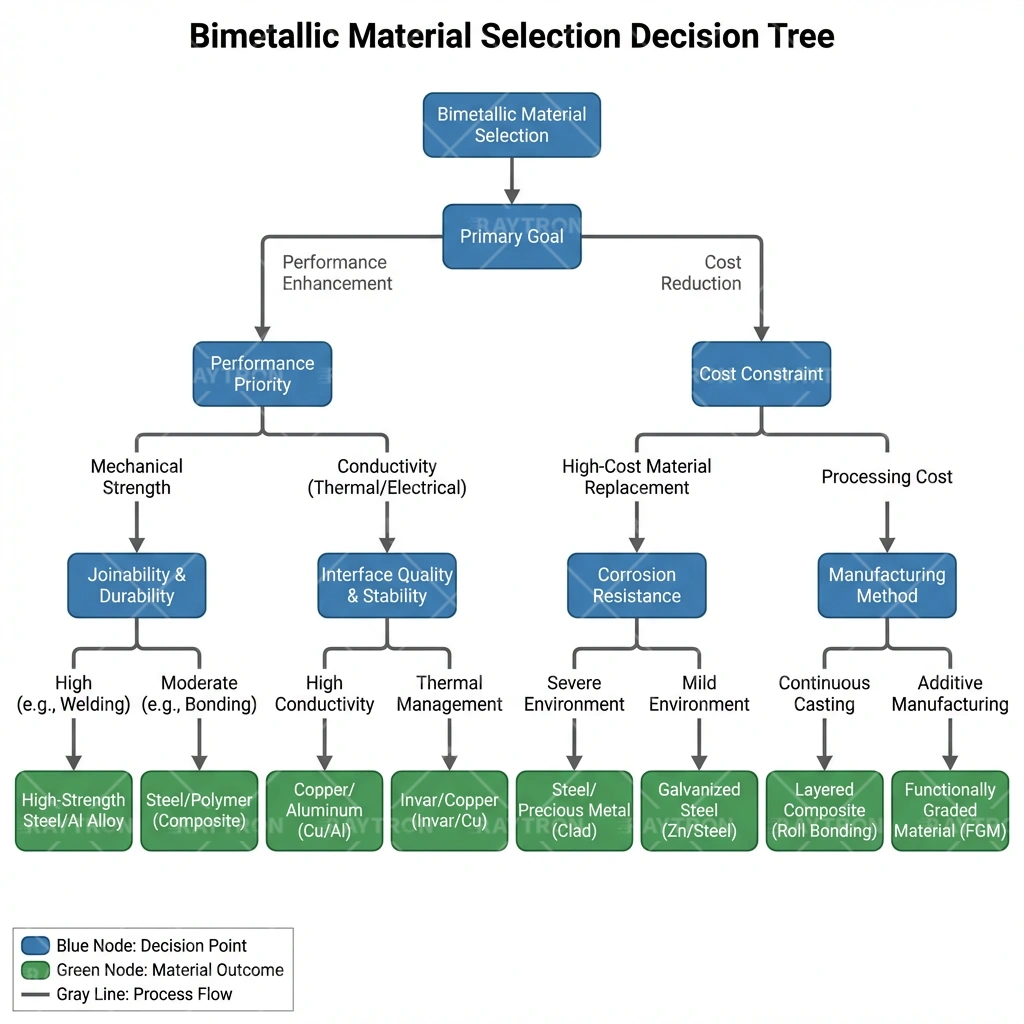
7.2 选择指南
决策框架:
步骤1:定义需求 - 电流容量、Operating Temperature、环境条件、机械要求、预算限制
步骤2:筛选候选 - 排除不适合的材料、考虑regulatory requirements
步骤3:比较最终候选 - 详细技术比较、经济分析、可用性验证
步骤4:验证设计 - 原型测试、Applications特定验证
8. standards与规范
8.1 国际standards框架
8.2 section法规
美国 (NEC):CCA允许在特定Applications中使用,需要正确标记,有尺寸限制
欧洲 (HD 60364):一般允许CCA,有安装要求,端子兼容性要求
中国 (GBstandards):接受度日益提高,有特定尺寸限制,需要质量certification
8.3 certification要求
9. 未来方向
9.1 技术趋势
新兴发展:
- 先进芯材:High strength铝合金(6xxx、7xxx系列)、优化钢种、新型组合
- 工艺创新:连续包覆、在线质量监控、自动检测
- Applications扩展:电动汽车充电基础设施、可再生能源系统、数据中心、5G/6G网络
9.2 市场展望
数据来源:Market Research Future[7]
9.3 研究重点
关键研究Section:
- 界面表征与优化
- High strength合金芯材开发
- 可持续性与回收
- 先进建模与仿真
- Applications特定材料设计
10. 结论
10.1 关键要点
- 双金属材料提供独特的性能组合,单一金属无法实现
- 材料选择需要系统评估电气、机械、环境和经济因素
- 制造质量至关重要——界面完整性决定性能
- 可节省30-50%成本,同时保持足够性能
- comply withstandards打开市场并确保可靠性
10.2 建议
对工程师:在设计过程早期评估双金属选项,考虑总体拥有成本而非仅材料成本,验证Applications特定standards合规性
对采购:建立合格供应商关系,实施进货检验协议,监控材料成本趋势
对管理层:认识材料替代的战略价值,投资Applications特定验证,跟踪法规发展
Frequently Asked Questions
What is a bimetallic conductor?
A bimetallic conductor is an engineered composite material that combines two different metals to achieve properties that neither metal can provide alone. In electrical applications, this typically consists of a core material (providing structural or economic benefits) and a cladding material (providing surface properties like conductivity or corrosion resistance).
What are the main types of bimetallic conductors?
The main types include: Copper-Clad Aluminum (CCA) for cost-effective conductivity, Copper-Clad Steel (CCS) for high-strength applications, Nickel-Clad Copper (NCC) for high-temperature environments, and Silver-Clad Copper (SCC) for high-frequency applications.
How much cost savings can bimetallic conductors provide?
According to our analysis, bimetallic conductors can provide 30-50% cost savings compared to solid copper conductors, while maintaining adequate electrical and mechanical performance for many applications.
What standards apply to bimetallic conductors?
Key standards include: ASTM B566 for CCA, ASTM B452 for CCS, ASTM B355 for NCC, IEC 62602 for international CCA specifications, and SAE AS4395 for aerospace applications.
What is the skin effect and why is it important for bimetallic conductors?
The skin effect causes high-frequency currents to concentrate near the conductor surface. For frequencies above 100 kHz, a thin copper cladding (≥0.5 mm) can provide equivalent performance to solid copper, making bimetallic conductors particularly effective for high-frequency applications like RF cables and switching power supplies.
Figures
创建双金属线材横Cross-Section示意图,标注各层功能和厚度比例
创建复合效应示意图,展示体积分数计算
创建电流方向示意图,对比平行和串联配置
创建应力-应变曲线对比图,展示复合材料的力学优势
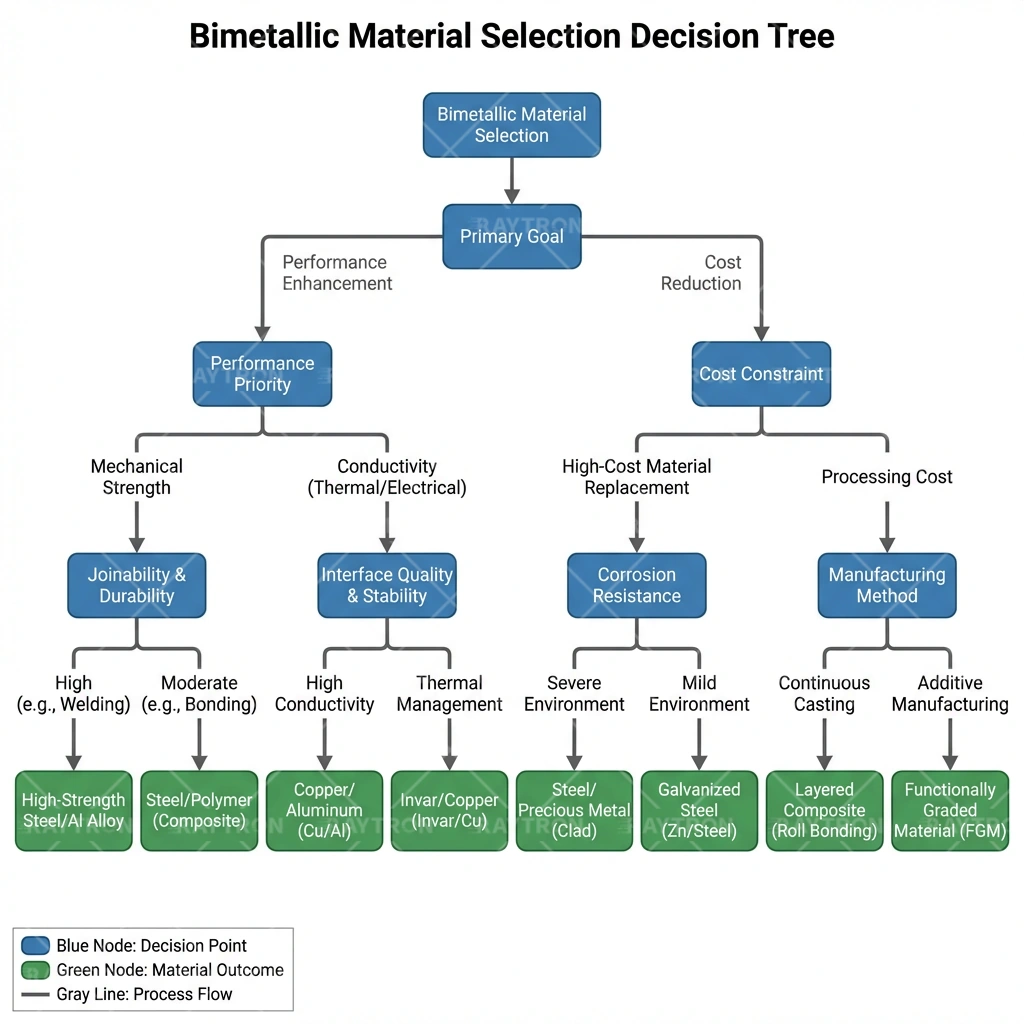
创建材料选择决策树Info图
CCA横Cross-Section显微照片,Display界面结构
CCS横Cross-Section显微照片
NCC横Cross-Section照片,标注镍包覆层
创建工艺流程图,展示从原材料到成品的完整流程
SEM界面形貌照片,Display扩散层
质量控制流程图,展示各检测点
创建性能雷达图,对比不同材料的多维性能
创建Applications section地图,按行业和材料分类
创建材料选择决策流程图
创建standards体系框架图,展示ASTM、IEC、ISO的关系
创建技术发展路线图
Tables
| 时代 | 主要材料 | 关键驱动 | 局限性 |
|---|---|---|---|
| 1830-1880 | 铁和钢 | 可获得性 | 高电阻 |
| 1880-1920 | 铜 | 导电性 | 成本波动 |
| 1920-1960 | 铝 | 减重 | 连接Question |
| 1960-至今 | 双金属 | 优化性能 | 工艺复杂 |
| 材料 | Conductivity (% IACS) | Density (g/cm³) | Tensile Strength (MPa) | 成本指数 |
|---|---|---|---|---|
| 铜 (纯) | 100 | 8.96 | 220-250 | 1.00 |
| 铝 (纯) | 61 | 2.70 | 70-110 | 0.25 |
| 钢 (低碳) | 10-15 | 7.85 | 400-550 | 0.08 |
| CCA (15% Cu) | 65-68 | 3.64 | 150-200 | 0.40 |
| CCS (20% Cu) | 35-40 | 8.20 | 400-550 | 0.30 |
| 频率 | 铜趋肤深度 | 铝趋肤深度 | 实际意义 |
|---|---|---|---|
| 60 Hz | 8.5 mm | 10.9 mm | 低频:体传导 |
| 1 kHz | 2.1 mm | 2.7 mm | 音频:Surface开始重要 |
| 10 kHz | 0.66 mm | 0.85 mm | 开关电源 |
| 100 kHz | 0.21 mm | 0.27 mm | 射频Applications |
| 1 MHz | 0.066 mm | 0.085 mm | 高频射频 |
| 主要需求 | 推荐材料 | 理由 |
|---|---|---|
| 降Low cost | CCA, CCS | 节省铜材 |
| 减轻Weight | CCA, CCAA | 铝芯 |
| 高温Applications | NCC | 镍Anti-oxidation性 |
| 高频Applications | SCC, CCA | 趋肤效应利用 |
| Corrosion Resistant | CCSS, ACS | 不锈钢/铝Surface |
| High strength | CCS, ACS | 钢芯 |
| 材料 | 状态 | 主要优势 | 开发阶段 |
|---|---|---|---|
| CCAA | 商业化 | 更High strength | 生产 |
| CCSS | 专业化 | Corrosion Resistant性 | 有限生产 |
| SSCC | 实验性 | 耐磨Surface | 研发 |
| CCZ | 研究 | 成本降低 | 实验室 |
| 方法 | 原理 | 典型厚度 | 结合质量 | 成本 |
|---|---|---|---|---|
| 包覆焊接 | 带材包裹+拉拔 | 10-40%体积 | 优秀 | 中etc. |
| 电镀 | 电化学沉积 | 0.5-10 μm | 中etc. | 低 |
| 热挤压 | 压力结合 | 5-30%体积 | 良好 | 中etc. |
| 粉末冶金 | 烧结 | 可变 | 可变 | 高 |
| 材料 | 芯材强度 | 包覆层贡献 | 界面效应 |
|---|---|---|---|
| CCA | 70-110 MPa | +20-40 MPa | +10-30 MPa |
| CCS | 400-550 MPa | +0 MPa | +0-20 MPa |
| NCC | 220-250 MPa | +30-50 MPa | +20-40 MPa |
| 材料 | LME价格 ($/吨) | Density (g/cm³) | 体积成本 ($/cm³) |
|---|---|---|---|
| 铜 | 12,890 | 8.96 | 0.115 |
| 铝 | 2,500 | 2.70 | 0.0068 |
| 镍 | 14,120 | 8.90 | 0.126 |
| 银 | 1,045,000 | 10.49 | 10.96 |
| 钢 | 650 | 7.85 | 0.0051 |
| 因素 | 铜 | CCA | CCS |
|---|---|---|---|
| 材料成本 | $850 | $380 | $320 |
| 安装成本 | $150 | $180 | $160 |
| 运行损耗 | $120 | $145 | $180 |
| 维护 | $50 | $60 | $50 |
| 回收价值 | -$85 | -$30 | -$15 |
| 20年TCO | $1,085 | $735 | $695 |
| Applications | CCA | CCS | NCC | SCC |
|---|---|---|---|---|
| 建筑导线 | ★★★☆☆ | ★☆☆☆☆ | ★☆☆☆☆ | ★☆☆☆☆ |
| 同轴电缆 | ★★★★★ | ★★★★☆ | ★☆☆☆☆ | ★★★☆☆ |
| 接地 | ★★☆☆☆ | ★★★★★ | ★★☆☆☆ | ★☆☆☆☆ |
| Aerospace | ★★☆☆☆ | ★☆☆☆☆ | ★★★★★ | ★★★☆☆ |
| 汽车 | ★★★★☆ | ★★☆☆☆ | ★★★☆☆ | ★☆☆☆☆ |
| 射频/微波 | ★★★★☆ | ★★★☆☆ | ★★☆☆☆ | ★★★★★ |
| standards | 材料 | 范围 | 发布机构 |
|---|---|---|---|
| ASTM B566 | CCA | 规范 | ASTM |
| ASTM B452 | CCS | 规范 | ASTM |
| ASTM B355 | NCC | 规范 | ASTM |
| IEC 62602 | CCA | 国际 | IEC |
| SAE AS4395 | NCC | Aerospace | SAE |
| IEEE 80 | 接地 | Applications | IEEE |
| Applications | 所需certification | 典型测试 |
|---|---|---|
| 建筑导线 | UL, cUL | 阻燃、机械、电气 |
| 汽车 | IATF 16949 | 汽车专用测试 |
| Aerospace | SAE, Mil-Spec | 高温、振动 |
| 船舶 | ABS, DNV | 腐蚀、环境 |
| 细分市场 | 2026 ($M) | 2030 ($M) | CAGR |
|---|---|---|---|
| CCA | 2,100 | 3,200 | 11.1% |
| CCS | 850 | 1,100 | 6.7% |
| NCC | 320 | 450 | 8.9% |
| SCC | 180 | 250 | 8.6% |
References
- The Evolution of Electrical Conductors: A Historical Perspective IEEE Industry Applications Magazine 24(3) , 45-52 (2018)
- History of Electrical Engineering IEEE Publications (2023)
- ASTM B566-04: Standard Specification for Copper-Clad Aluminum Wire ASTM International, West Conshohocken, PA (2020) https://www.astm.org/Standards/B566.htm
- ASM Handbook, Volume 2: Properties and Selection: Nonferrous Alloys and Special-Purpose Materials ASM International (2020)
- Classical Electrodynamics (3rd ed.) Wiley (1999)
- LME Non-Ferrous Metals Prices LME (2026) https://www.lme.com
- Global Bimetallic Conductor Market Report 2026-2030 MRFR Publications (2025)
- Copper and Copper Alloys ASM International (2001)
- Materials in World Perspective Springer (1998)
- Aluminium Handbook Aluminium-Verlag (1994)
- Welding Handbook, Volume 3: Materials and Applications AWS (2021)
- Optimization of precious metal cladding for electrical conductors Journal of Electronic Materials 47(8) , 4521-4529 (2018)
- Interface formation in bimetallic conductors Materials Science and Engineering A 823 , 141789 (2021)
- IEC 62602: Copper-clad aluminum for electrical purposes IEC, Geneva (2022) https://www.iec.ch
- SAE AS4395: Copper-Clad Aluminum Wire for Aerospace SAE International (2020) https://www.sae.org