
Advanced Testing: Bimetallic Conductor Characterization
1. 引言
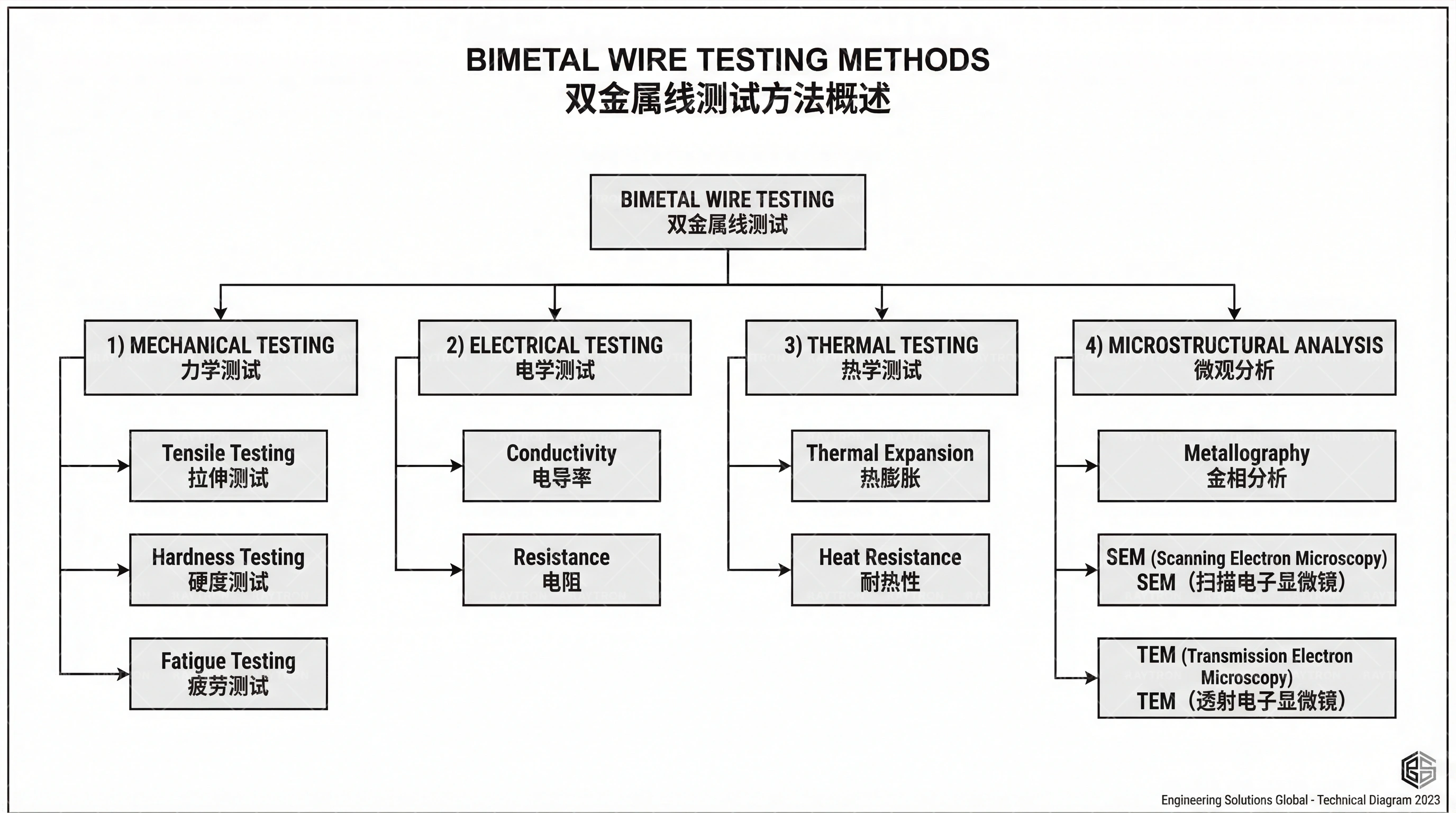
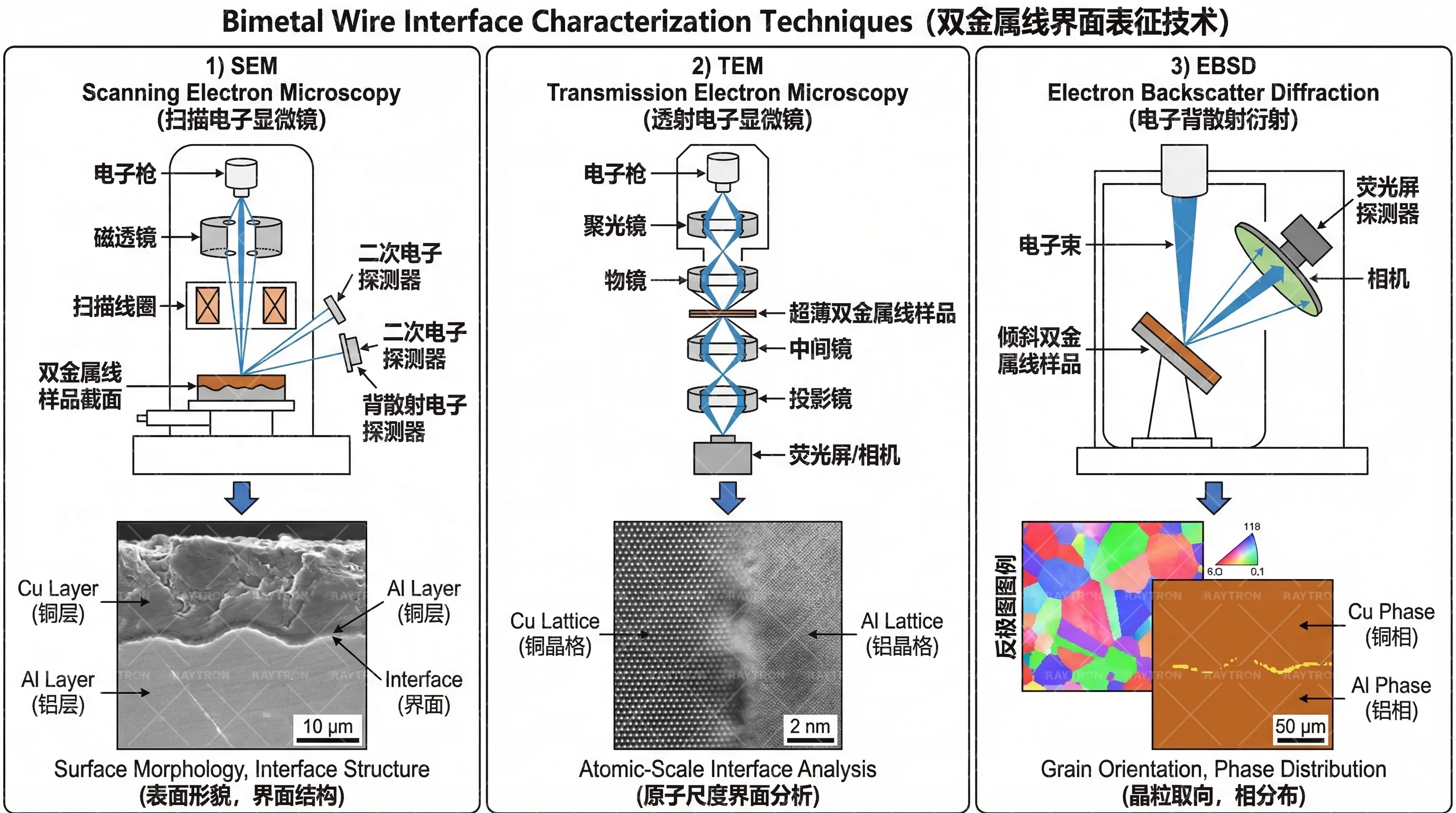
2. 显微分析
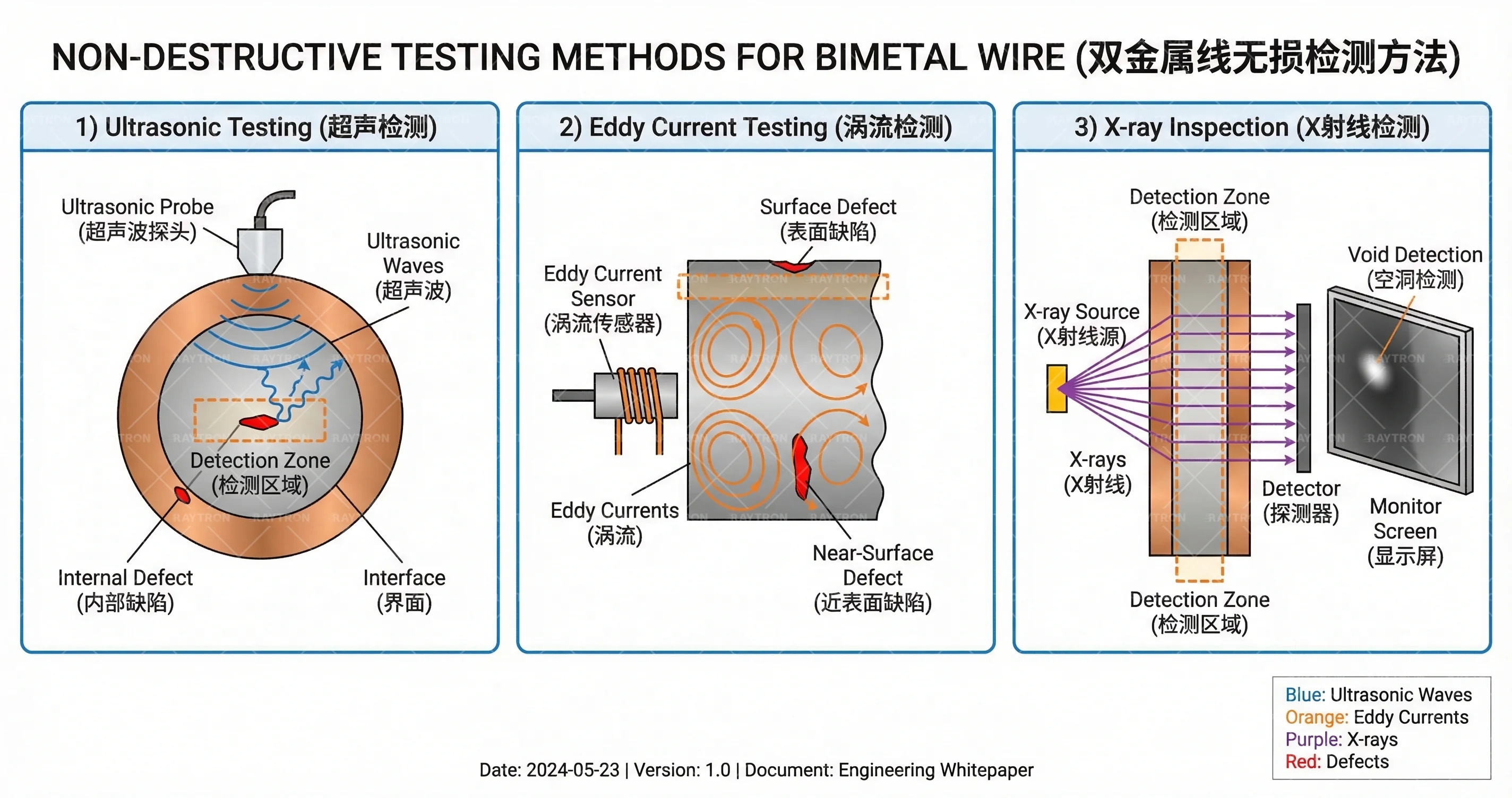
3. 无损检测
4. 力学测试
5. 电学测试
6. 结论
Frequently Asked Questions
How to choose appropriate characterization method?
Choose based on information needed: SEM for interface morphology, TEM for atomic structure, EDS for composition distribution, peel testing for bond strength, four-point probe for conductivity. Combining multiple methods provides comprehensive characterization.
What are the limitations of non-destructive testing?
Ultrasonic testing has difficulty detecting small defects (<0.5mm); eddy current testing is affected by material magnetism and surface condition; X-ray testing has low sensitivity for thin sections. Non-destructive testing needs to be combined with destructive testing.
How to ensure accuracy of test results?
Methods to ensure accuracy: use calibrated equipment, follow standard test methods, perform repeat testing, establish test uncertainty assessment, regularly conduct inter-laboratory comparison. Testing personnel need professional training.
Figures
SEM界面形貌照片
创建超声检测原理图
创建拉伸测试曲线
Tables
| 技术 | 分辨率 | Info类型 |
|---|---|---|
| OM | 0.5 μm | 形貌 |
| SEM | 10 nm | 形貌+成分 |
| TEM | 0.1 nm | 原子结构 |
| 方法 | 检测能力 | 适用性 |
|---|---|---|
| 超声 | 分层、孔隙 | 所有 |
| 涡流 | Conductivity、厚度 | 导电材料 |
| X射线 | 内部缺陷 | 厚Cross-Section |
References
- Materials Characterization Handbook ASM (2020)